
Industrial & Infrastructure
Building materials and industrial applications for sustainable infrastructure.
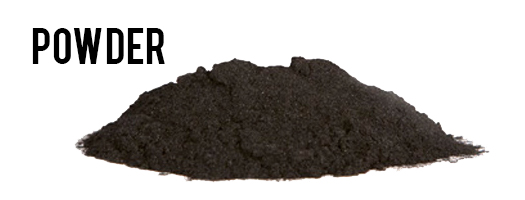
Powder or Small Biochar
Application Rate
0.5-2.0% of binder (5-20 kg per m³ concrete)
Expected Results
Improved compressive strength, up to 40% lower permeability, 3-8% cement savings (validate locally)
Why This Grade?
Fine particles (Powder <75 µm) refine pore structure and improve hydration; Small grade can replace fine sand in non-architectural mixes
Add Powder or Small biochar at 0.5-2.0% w/w of binder during mixing. The fine particles (~400 m²/g) fill micropores, reduce water permeability, and accelerate early-age strength development. RMIT field trials demonstrate biochar can improve concrete performance, but specific strength gains depend on mix design and local conditions. Validate finish/air entrainment with admixture vendor. Benefits may include higher 28-day compressive strength, reduced drying shrinkage, and improved resistance to freeze-thaw cycles. For precast applications, biochar can reduce curing time.
Application: Blend Powder/Small biochar with dry cement before adding water; maintain standard water-cement ratios
Oklahoma Fit
Ready-mix and pre-cast plants: Dolese Bros., Summit Materials, Central Pre-Mix
Pricing Context
At $1000/ton, biochar adds $5-20 per m³ of concrete. Cement savings of $8-15/yd³ plus potential carbon credits. Payback through reduced cracking and longer service life.

Powder or Small Biochar
Application Rate
0.05-0.15% by weight of asphalt mix
Expected Results
10-25% increase in softening point, 20-30% longer service life, reduced aging
Why This Grade?
Powder/Small grades blend with asphalt binder; improve rutting resistance and thermal properties
Blend Powder or Small biochar at 0.05-0.15% w/w into asphalt mix at 160-180°C. The porous carbon improves binder stiffness at high temperatures (reducing rutting) while maintaining flexibility at low temperatures (reducing cracking). Field trials show reduced aging and improved fatigue resistance. Oklahoma's climate (hot summers, freeze-thaw cycles) benefits from biochar's thermal buffering.
Application: Mix biochar into hot asphalt binder before aggregate addition; standard paving procedures apply
Oklahoma Fit
Tulsa Asphalt, Wright Asphalt, ODOT test sections
Pricing Context
At $1000/ton, biochar adds $0.50-1.50 per ton of asphalt mix. Reduced maintenance cost $4-8/ton. Payback in 1-2 years through longer pavement life.
Powder Biochar
Application Rate
3-5% by weight as filler
Expected Results
20-30% longer service life, improved UV resistance, reduced thermal aging
Why This Grade?
Ultra-fine Powder disperses uniformly in asphalt coating; provides UV resistance and thermal stability
Incorporate Powder biochar at 3-5% w/w into asphalt roofing coating. The carbon matrix absorbs heat and slows oxidation, extending shingle life. Biochar improves binder stability and UV resistance, critical for Oklahoma's intense summer sun and temperature swings.
Application: Blend Powder biochar into asphalt coating during shingle manufacturing; standard production processes apply
Oklahoma Fit
TAMKO Roofing (Joplin, MO - serves Oklahoma market)
Pricing Context
At $1000/ton, biochar at 4% loading adds $40/ton to shingle cost but extends lifespan 20-30%, reducing replacement frequency.
Powder Biochar
Application Rate
5-15% by weight in polymer matrix
Expected Results
10-30% increase in stiffness and tensile strength, 25% better UV resistance
Why This Grade?
Ultra-fine Powder disperses uniformly in polymer melts; provides reinforcement and UV protection
Incorporate Powder biochar at 5-15% w/w into polyethylene, polypropylene, or PLA during extrusion or injection molding. The fine particles improve tensile strength, reduce polymer consumption, and provide UV protection (extending outdoor life). Use with coupling agents for PP/PE compatibility. Biochar-filled plastics meet sustainability goals while maintaining performance. Applications include agricultural films, outdoor furniture, composite decking, and automotive parts.
Application: Dry-blend Powder biochar with polymer pellets before processing; adjust processing temps as needed
Oklahoma Fit
Composite decking and plastic manufacturers near Tulsa and OKC
Pricing Context
At $1000/ton, biochar at 10% loading adds $0.10/kg to plastic cost but reduces virgin polymer use and adds carbon-negative credentials. Comparable cost to carbon black with lower footprint.
Partner-Activated Carbon (GAC) or Small/Powder Biochar
Application Rate
Varies by system; GAC for compliance, biochar for pre-treatment
Expected Results
70-90% organics or odor reduction (biochar), >99% removal (GAC), 25-40% lower operating cost
Why This Grade?
GAC for regulated applications; biochar for cost-effective pre-filtration
Track A: Partner-Activated Carbon (GAC)
For PFAS, VOCs, and regulatory filtration, use steam-activated GAC media with reactivation validation (e.g., NORIT Pryor, OK). Provides >99% removal and full lifecycle reactivation.
Track B: Engineered Biochar
For pre-polish beds, odor control, lagoons, and low-pressure systems. Use Small grade for moderate adsorption and low pressure drop; expect shorter service life than GAC but lower media cost.
Oklahoma Fit
Food processors, breweries, municipal WWTPs, and industrial sites partnering with NORIT for reactivation loops
Pricing Context
At $1000/ton, biochar pre-treatment reduces total GAC consumption by 25-40%, lowering overall filtration costs. Payback in 1-2 years.
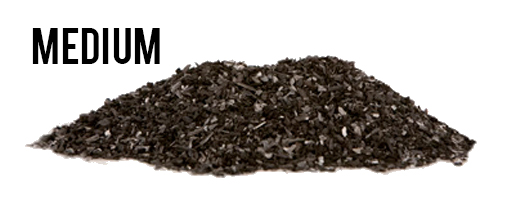
Medium or Chip Biochar
Application Rate
10-20% replacement of metallurgical coke
Expected Results
15-25% CO₂ reduction per ton of steel, improved slag stability, comparable steel quality
Why This Grade?
Medium/Chip grades provide sufficient carbon content and structural integrity for slag foaming and recarburization
Replace 10-20% of metallurgical coke with Medium or Chip biochar in EAF operations. Recent pilot studies (Finland 2024, Journal of Cleaner Production) demonstrate biochar can serve as a slag foaming agent and carbon source, achieving 15-25% CO₂ reduction per ton of steel produced. The high fixed-carbon content (~80-85%) and renewable origin make biochar a viable decarbonization pathway for steel production. Benefits include reduced fossil carbon dependency, improved slag stability, and potential carbon credit eligibility under emerging industrial biochar pathways (DOE BETO 2025, EBC v10.2).
Application: Inject Medium/Chip biochar into EAF during melting phase; adjust oxygen and power inputs as needed for optimal slag foaming
Oklahoma Fit
CMC Steel (Durant, OK) - electric arc furnace operations
Pricing Context
At $1000/ton, biochar at 15% substitution adds $30-60 per ton of steel but qualifies for carbon credits ($120-300/t CO₂e) and reduces fossil carbon procurement costs. Payback in 1-2 years.
Premium Biochar Advantage
InfiniteEco Biochar
Commodity Biochar
Use 50-66% less material with InfiniteEco engineered biochar due to higher surface area and optimized pore structure.
Ready to Explore Industrial Applications?
Discover how biochar can improve your materials, reduce costs, and store carbon in long-life products.